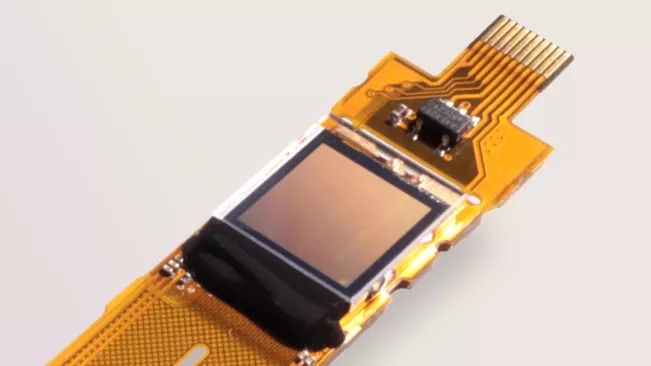
Until today, we’ve shared with you everything about our light field display — our core mission, the north star, and the “holy grail” of AR.
Let’s now take a closer look at the key component that makes it possible: C·Bast, our proprietary FLCoS (Ferroelectric Liquid Crystal on Silicon) microdisplay, and what makes it a game-changer for today’s AR display.
First, let’s provide a bit of context.
Most AR displays today are essentially miniaturized monitors. They inherit properties developed for seated viewing of dense, high-fidelity content, in a narrow Field of View (FoV), namely: uniform pixel grids, high color resolution, and a relatively low frame rate.
AR is different.
The classical brute-force approach of optically magnifying a uniform pixel grid hits a hard barrier: a tyrannical link between resolution and FoV. Both cannot be maximized at once without unrealistically small and bright pixels, and/or paying an unacceptable price in pixel count, display volume, compute, and power density.
AR needs displays that are more dynamic, sparse, brighter, spanning a significantly wider FoV, and that must fit into an extremely constrained engine. This creates fundamentally different requirements on the display engine: speed, high brightness density, and extreme pixel and power efficiency.
Laser-FLCoS system breaks this barrier through its “speed” and optical efficiency.
FLCoS is an ultra-high frame-rate reflective Spatial Light Modulator (SLM), similar to LCoS, but inherently binary, with some of the smallest high-quality RGB pixels ever demonstrated, and produced using mature, scalable, and low-cost processes. The FLCoS is therefore a perfect candidate for powering today’s AR glasses.
The highest frame rate to eliminate motion blur and color breakup in AR
“You can shake your head all the way you want, and your eyeball will just stay locked. It won’t move. (…) So you’re going to get blur if you keep the frame on for the full frame time.“ (Ajit Ninan)
We start this series by introducing our FLCoS microdisplay’s most iconic property: its ultra-high speed, the foundation of content stability in AR.
Unlike conventional screens, AR displays move with the head, while the eyes remain locked on the zero-latency real-world. This inversion of motion dynamics makes classical display parameters – 60 to 120 fps refresh rates, 8 to 16 ms frame durations (necessary to build up brightness), and typical latencies above 10 ms – fundamentally inadequate. As the head rotates, even static content blurs across the retina.
To reliably anchor virtual objects to the real space without motion blur, AR displays must combine higher framerate, shorter frame duration, and lower latency.
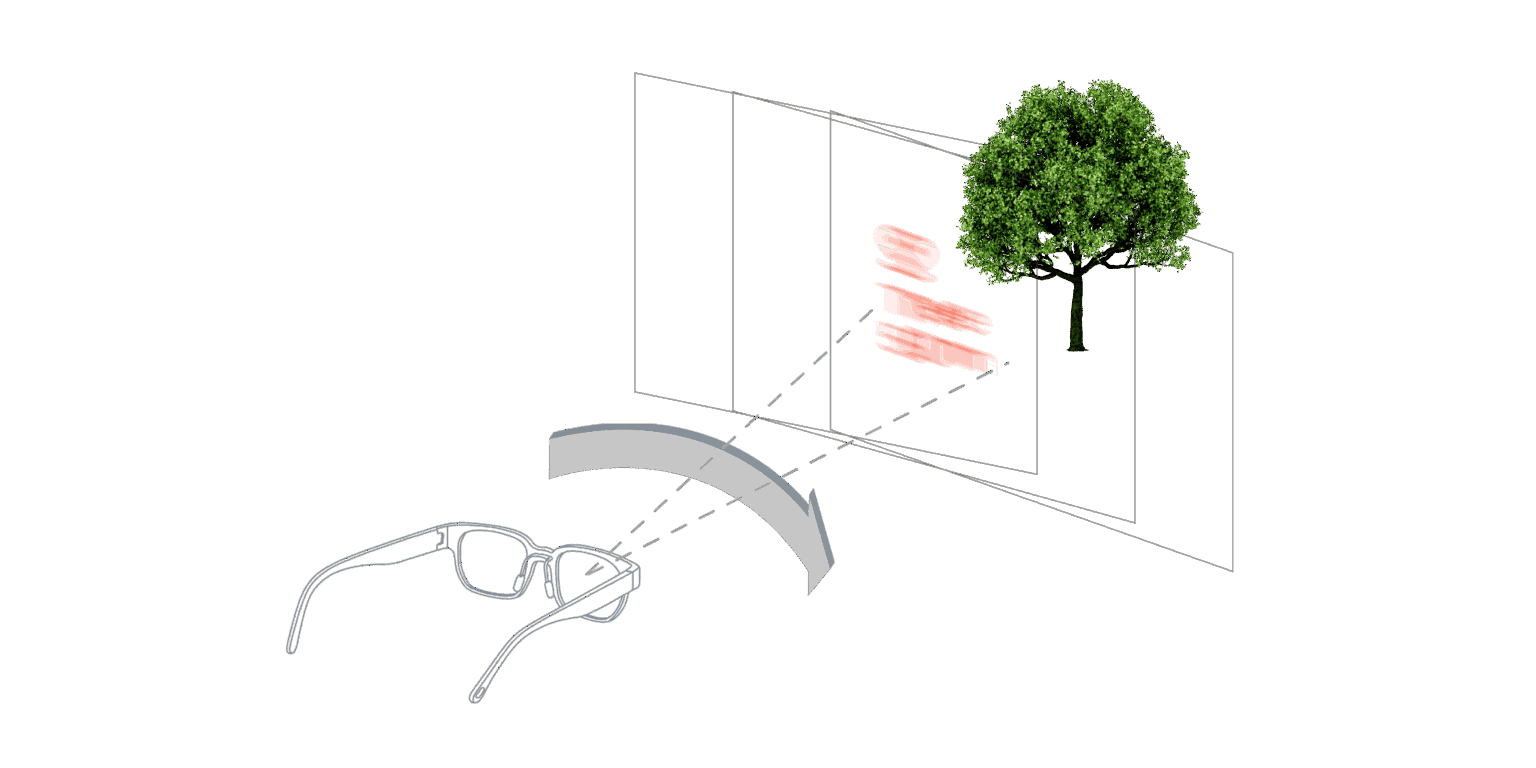
Current AR displays suffer from low framerate, high latency and extended image duration, leading to instability, motion blur, and color breakup in the AR content.
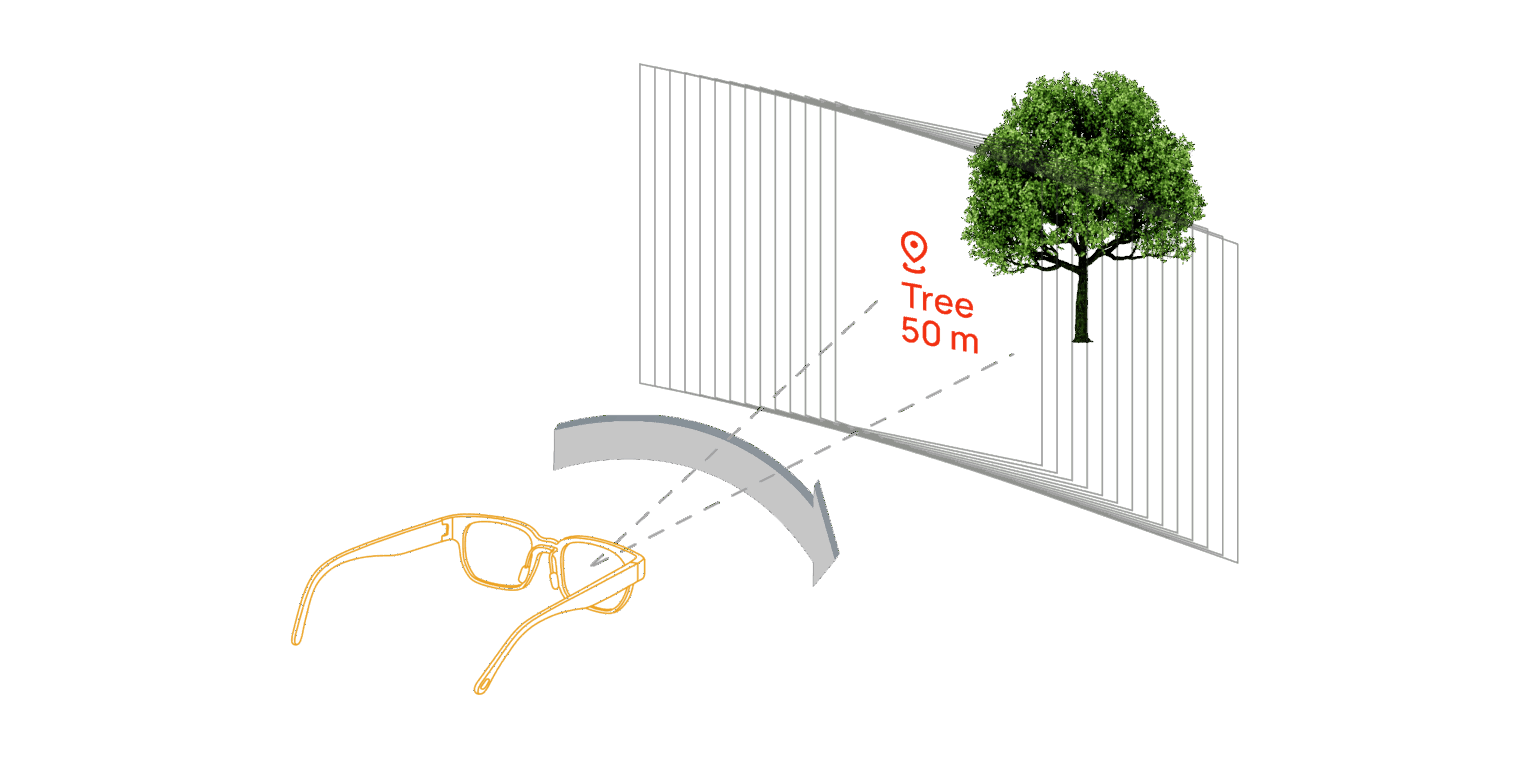
CREAL’s microdisplay combines ultra-high framerate (8kHz — the highest in AR today) and microsecond frame durations to eliminate motion artifacts entirely. The result is AR content that is fully stable, sharp, and without color breakup — even during rapid motion.
Waveguide-compatible pixel replication system to enable the widest field of view from the smallest AR display engine
“FOV 30° is the sound barrier for AR in an eyeglasses form factor.” (Karl Guttag)
Wide Field of View and high resolution approached with brute force requires too many of too small and too bright pixels, “hitting the 30° FoV sound barrier for AR in an eyeglasses form factor”.
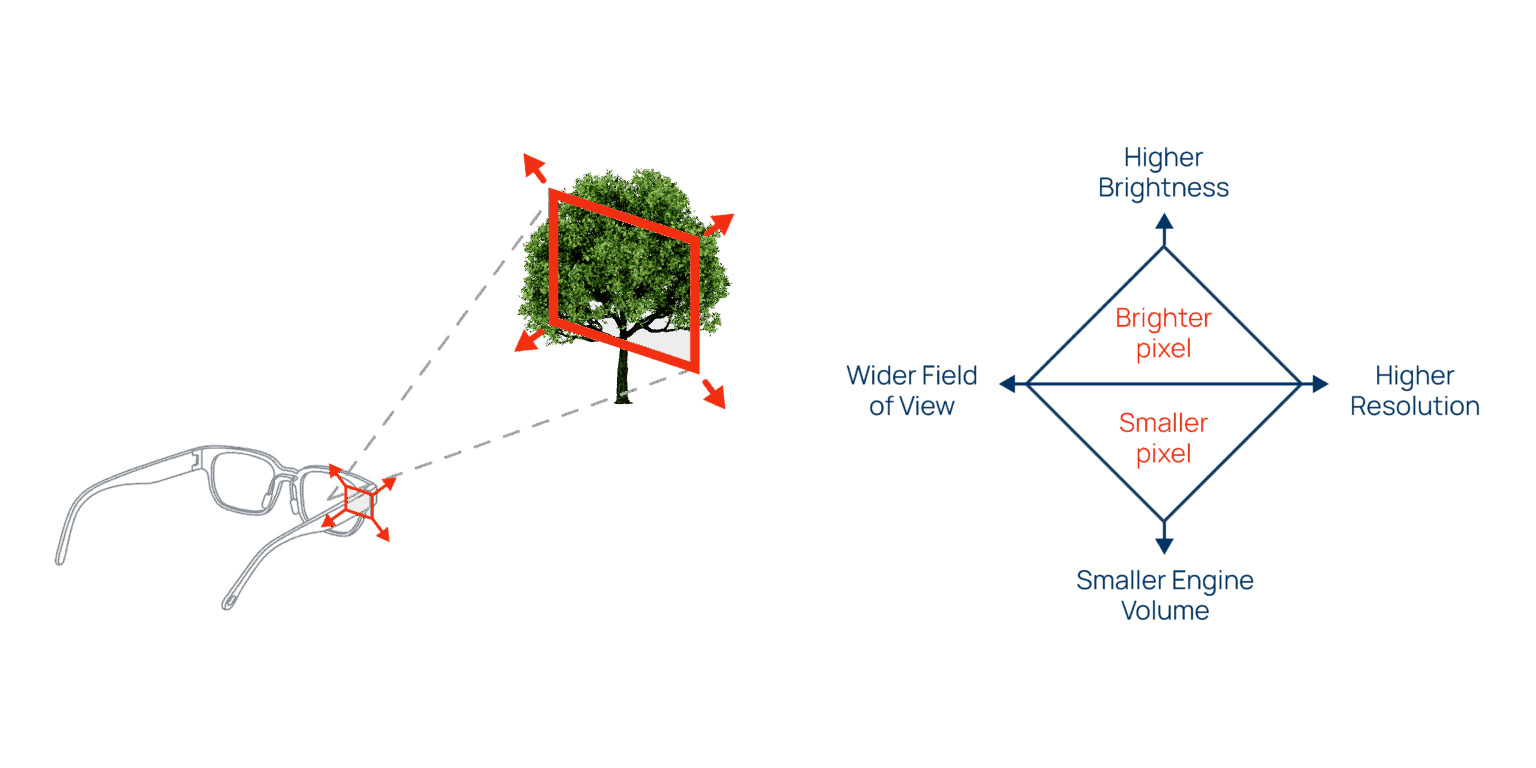
CREAL’s new “Time-Sequential Pixel Replication” system bypasses this pixel tyranny by tiling small frames to create one big frame. It’s a new kind of “Pixel Economy”: higher perceived resolution from fewer physical pixels.
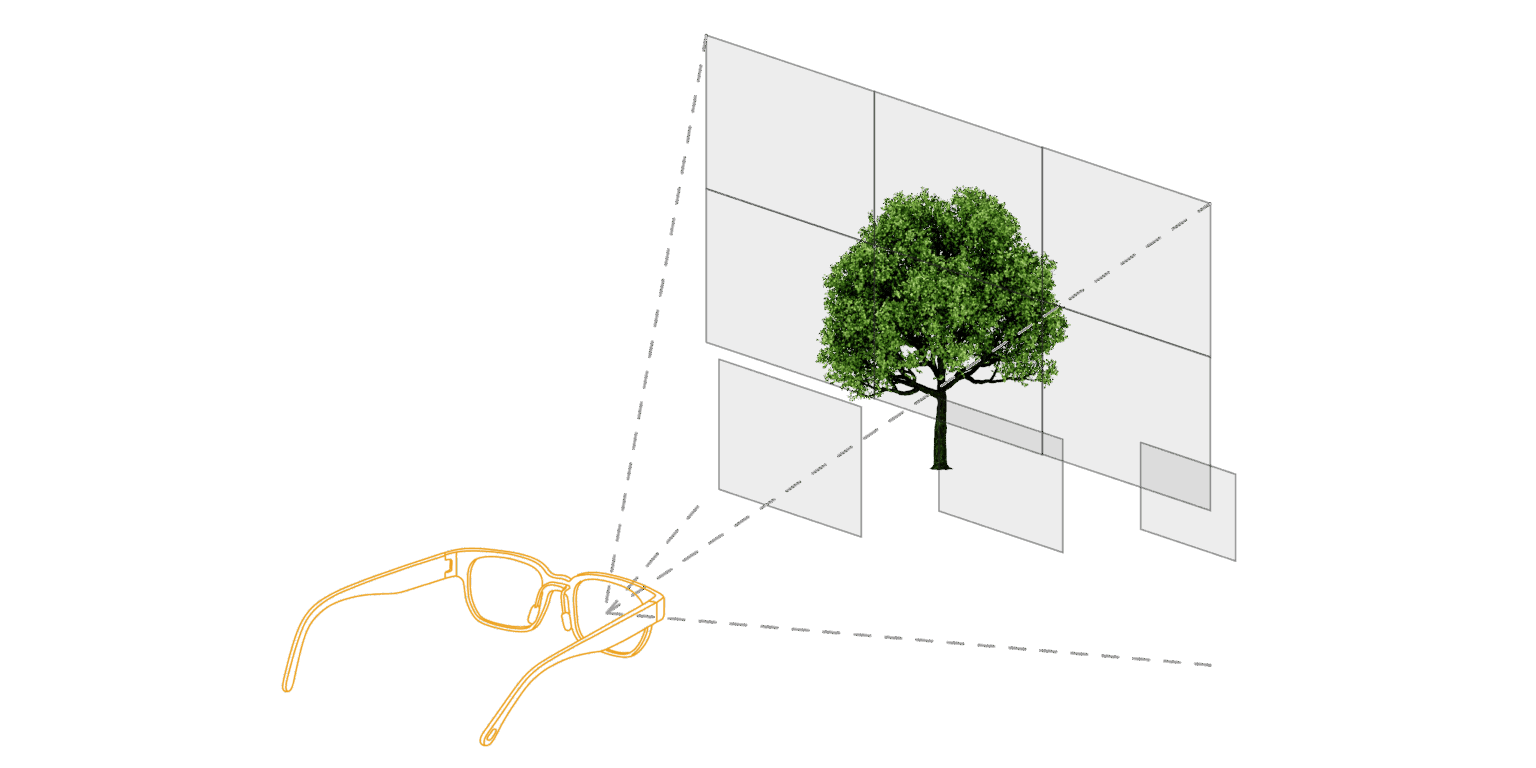
CREAL’s patented Pixel Replication system integrates seamlessly with waveguide-based display architectures, offering immediate compatibility with today’s AR ecosystem.
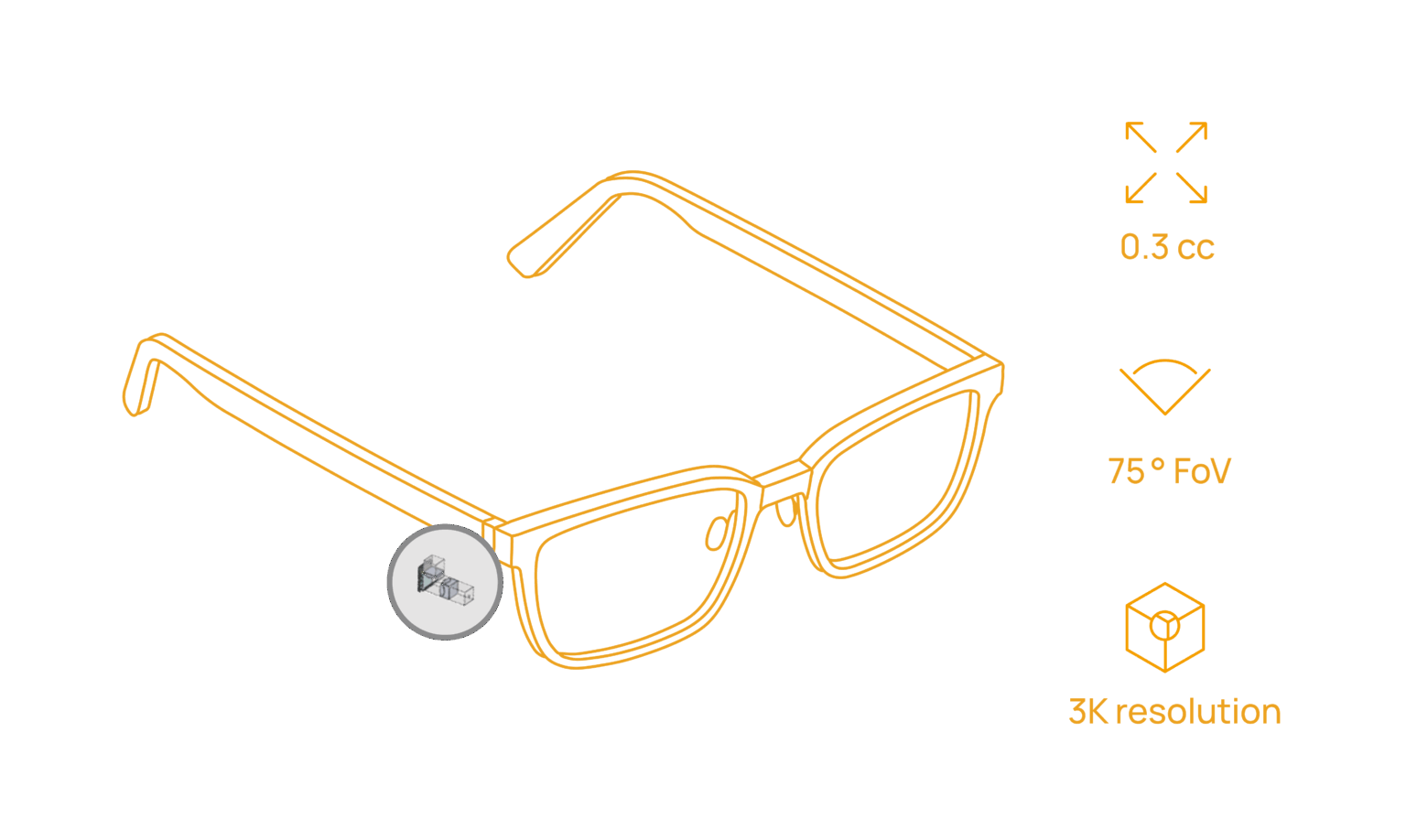
CREAL’s waveguide-compatible AR system breaks the AR sound barrier and will ultimately enable a 75˚FoV @ 40 ppd (foveated) with a perceived 3K resolution experience from a <1 cc display engine.
TrendForce 2025 Near-Eye Display Market Trend and Technology Analysis
Publication Date : 8/29, 2025
Language : Traditional Chinese / English
Format : PDF
Page Number: 168
|
If you would like to know more details , please contact:
|


