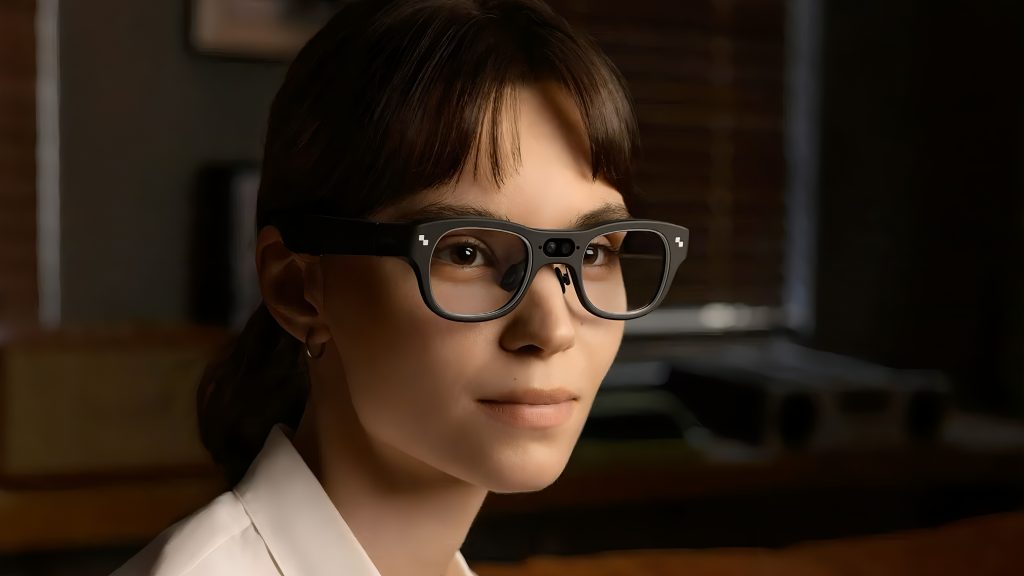
In the first half of 2026, the AR glasses industry entered a stage of accelerated commercialization. The integration of AI foundation models and near-eye display technologies has gathered momentum, with global tech giants and domestic innovators launching new products in quick succession. Capital continues to flow into core components, including optical engines and waveguides, driving the transition of AR glasses from “technical exploration” to “market cultivation”.
According to TrendForce, global AR glasses shipments are projected to surpass 1 million units in 2026.
As the industry enters this new phase, competitive strategies between domestic and overseas players are visibly diverging.
Global Tech Giants: Focusing on Tech Roadmaps and Ecosystems
-
Meta: Pursuing a dual-track strategy. Meta is preparing Micro LED technology (such as the Orion prototype) for mass production; meanwhile, it is adopting mature LCoS technology (such as Meta Ray-Ban Display Glasses) for the mass consumer market. In February 2026, LCoS specialist Raontech joined the Meta- and Google-led AR alliance to bolster the underlying ecosystem.
-
Samsung: Also advancing a dual-track strategy, concurrently developing AI glasses and Micro LED AR glasses.
-
Apple: Accelerating its entry into the market by advancing the commercial rollout of AI glasses under the internal codename N50.
-
Google: Focusing on foundational ecosystem development, Google has bifurcated its hardware roadmap into “immersive AR” and “lightweight AI glasses,” collaborating with hardware partners such as Samsung, Warby Parker, Gentle Monster, and XREAL.
Chinese Manufacturers: Deepening Capital Tie-ups and Ecosystem Synergies
Compared to overseas tech giants, Chinese companies are more focused on immediate market execution and commercialization. Funding models have shifted from purely financial investments to deep industrial capital integration:
-
Upstream/Downstream Synergies: Rokid secured investment from SEICHI, Fibocom, and Conant Optical, with SEICHI contributing its expertise in key Micro LED inspection technologies.
-
Cross-Industry Empowerment: RayNeo introduced strategic investment from telecom operators including China Mobile and China Unicom to explore offline retail channels and eSIM adoption. Even Realities received backing from Meituan and Tencent. Honor The Unknown secured funding from Lenovo to collaborate on supply chains and retail channels.
-
Segmented Application Scenarios: Even Realities is targeting outdoor sports, Even focuses on mobile productivity and everyday interaction, while VITURE and INMO are expanding overseas distribution and AI+AR ecosystems.
Accelerated Evolution of AR Display and Optical Technologies
As the core link connecting hardware with user experience, micro-display solutions—including Micro LED, Micro OLED, and LCoS—alongside optical waveguide components are achieving rapid technical breakthroughs.
Micro LED: Focus on Lightweight Designs and Broader Scenarios
Micro LED remains one of the primary micro-display solutions under development. New 2026 releases show a clear trend toward ultra-lightweight designs, with total device weight generally maintained between 25g and 50g, and products weighing 40g or less accounting for nearly 70% of new releases.
SMARTXY and Meta-Bounds (utilizing resin diffractive optical waveguides) reduced device weight to as low as 25g. Application scenarios are expanding into sports (Volkswagen, BOE), vision correction (Bit Fantasy), home cooking (Robam Appliances), and standalone communications (RayNeo with eSIM support).
Upstream and downstream supply chains are expanding capacity rapidly:
-
SAPHLUX commissioned Phase 1 of its Wuxi base (1 million full-color optical engines annually), with Phase 2 planned for 20 million units per year.
-
JBD broke ground on Phase 2 of its Hefei facility and completed a 12-inch wafer reconstruction upgrade.
-
Hongshi Intelligent unveiled its ultra-compact “Yunjin” full-color optical engine.
-
Innovision achieved mass production and delivery of monolithic full-color chips featuring tens of thousands of PPI.
Micro OLED: Concentrating on Immersive Audiovisual and Capacity Expansion
Featuring high resolution and high refresh rates, Micro OLED has become the mainstream choice for light-immersive, viewing-oriented AR glasses.
-
RayNeo (GT series / Air 4 Pro) and VITURE (Pro 2) are prioritizing large-screen cinematic and gaming experiences.
-
Jupiter’s JOVE Glasses S1 pushed binocular full-color AI+AR glasses into lower price points.
In the supply chain, companies are accelerating transitions to 12-inch wafer platforms to reduce unit costs.
-
SIDTEK, Lumicore, Rayvision, and BCDTek all speed up pace in building production lines.
-
Seeya has successfully went public on STAR Market, raising RMB 2.015 billion to scale up 12-inch silicon-based OLED capacity.
LCoS: Continuous Iteration and Adoption by Tech Giants
-
The newly launched Snap Specs feature proprietary LCoS technology and electrochromic lenses, enabling switching between transparent and tint modes within 10 seconds.
-
Raven Resonance and Vuzix also launched new products featuring LCoS solutions.
Optical Waveguides: Thinning Physical Dimensions and Mass Delivery
-
Goolton and AAC Technologies reduced waveguide lens thickness to 0.7–8 mm, weighing approximately 4g per lens with light transmittance exceeding 90%.
-
Canon improved light coupling efficiency.
-
SEEV introduced an ultra-thin SiC optical waveguide solution designed for full-fit prescription integration.
On the manufacturing side, Yunzhan Optoelectronics, Nika Optics, and Goertek Optics initiated production lines. Goertek Optics formally commissioned its RMB 3.28 billion, 12-inch AR micro-nano optics wafer base in Shanghai Lingang, marking the industry’s transition from pilot trials to volume delivery.
Driven by capital inflows, giant entries, and core technical breakthroughs, all links of the AR supply chain are competing across hardware form factors, technical roadmaps, and application scenarios. The AR glasses industry is embracing new opportunities.
(Photo credit: JBD)
TrendForce 2025 Near-Eye Display Market Trend and Technology Analysis
Publication Date : 29 August 2025
Language : Traditional Chinese / English
Format : PDF
Page Number: 168
TrendForce 2026 Micro LED Display and Non-Display Application Market Analysis
Release: 30 September 2026
Format: PDF
Language: Traditional Chinese / English
|
If you would like to know more details , please contact:
|


