Ennostar today announced a breakthrough in Micro LED optical communications. The company’s R&D team has increased the single-channel -3 dB modulation bandwidth of its blue Micro LED to 2.1 GHz at a current density of 2 kA/cm². The sample further demonstrated a modulation bandwidth of up to 3.3 GHz at a current density of 5 kA/cm2. These results place Ennostar’s technology among the industry’s top-tier performance benchmarks and approaching the commercial specifications required for short-reach optical transmission using Micro LEDs.
The dramatic bandwidth improvement is the result of Ennostar's long-standing expertise in III-V compound semiconductor epitaxial technologies, Micro LED chip architecture, and process integration. By comprehensively optimizing both the epitaxial structure and material quality, the R&D team successfully overcame previous performance bottlenecks, delivering substantially higher modulation bandwidth while simultaneously maintaining low power consumption and excellent thermal management—two critical requirements for practical optical interconnect applications.
Modulation bandwidth is one of the most important performance metrics for optical communication devices, as it determines how rapidly a light source can modulate optical signals to carry digital information. Ennostar is advancing toward higher bandwidth and energy efficient transmission solutions to meet the escalating demands of AI workloads, hyperscale data centers, and high-performance computing (HPC).
As demand for next-generation optical interconnect technologies accelerates, Ennostar continues to expand its presence in emerging applications, with optical communications identified as one of the company's key strategic growth areas. The company is advancing a diversified technology roadmap built upon three complementary optical light-source platforms: Micro LED, VCSEL (Vertical-Cavity Surface-Emitting Laser), and CW-DFB Lasers (Continuous Wave Distributed Feedback Laser).
Looking ahead, Ennostar will continue to enhance modulation bandwidth, improve electro-optical conversion efficiency, and strengthen device reliability, leveraging its core compound semiconductor technologies to deliver highly competitive optical solutions for the next generation of high-speed data communications.
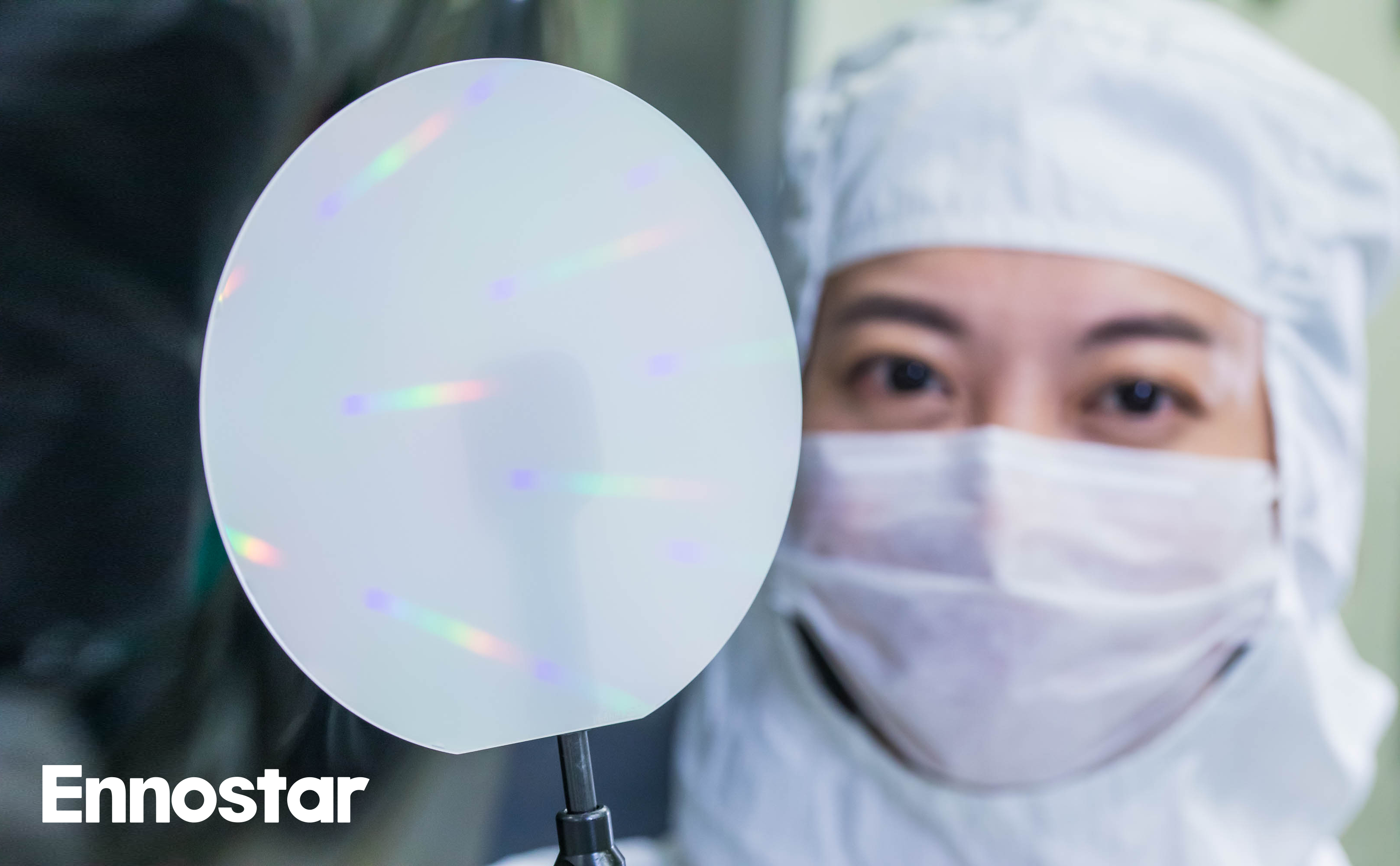
(Photo credit: Ennostar)
TrendForce 2026 Micro LED Display and Non-Display Application Market Analysis
Release: 30 September 2026
Format: PDF
Language: Traditional Chinese / English
TrendForce 2026 Infrared Sensing Application Market and Branding Strategies
Release: 01 January 2026
Format: PDF / EXCEL
Language: Traditional Chinese / English
Page: 168
|
If you would like to know more details , please contact:
|


