Driven by the deep integration of AI and wearables, as well as strong support from industry leaders, TrendForce projects that global AR glasses shipments will surpass the milestone of one million units in 2026. Furthermore, as the initial novelty wears off, consumers are expected to increasingly scrutinize the usefulness and AI-enabled experience of these products. Brands must therefore strike a balance between wearing comfort, affordability, and a comprehensive content ecosystem to meet ever-growing market expectations for AR glasses while ushering in the next phase of growth.
Global market intelligence firm TrendForce recently had the opportunity to conduct an in-depth interview with Mr. Zhang Jiawei, Chairman of KRETA, to gain insights into the company's latest AI glasses offerings and its strategic roadmap for the future.
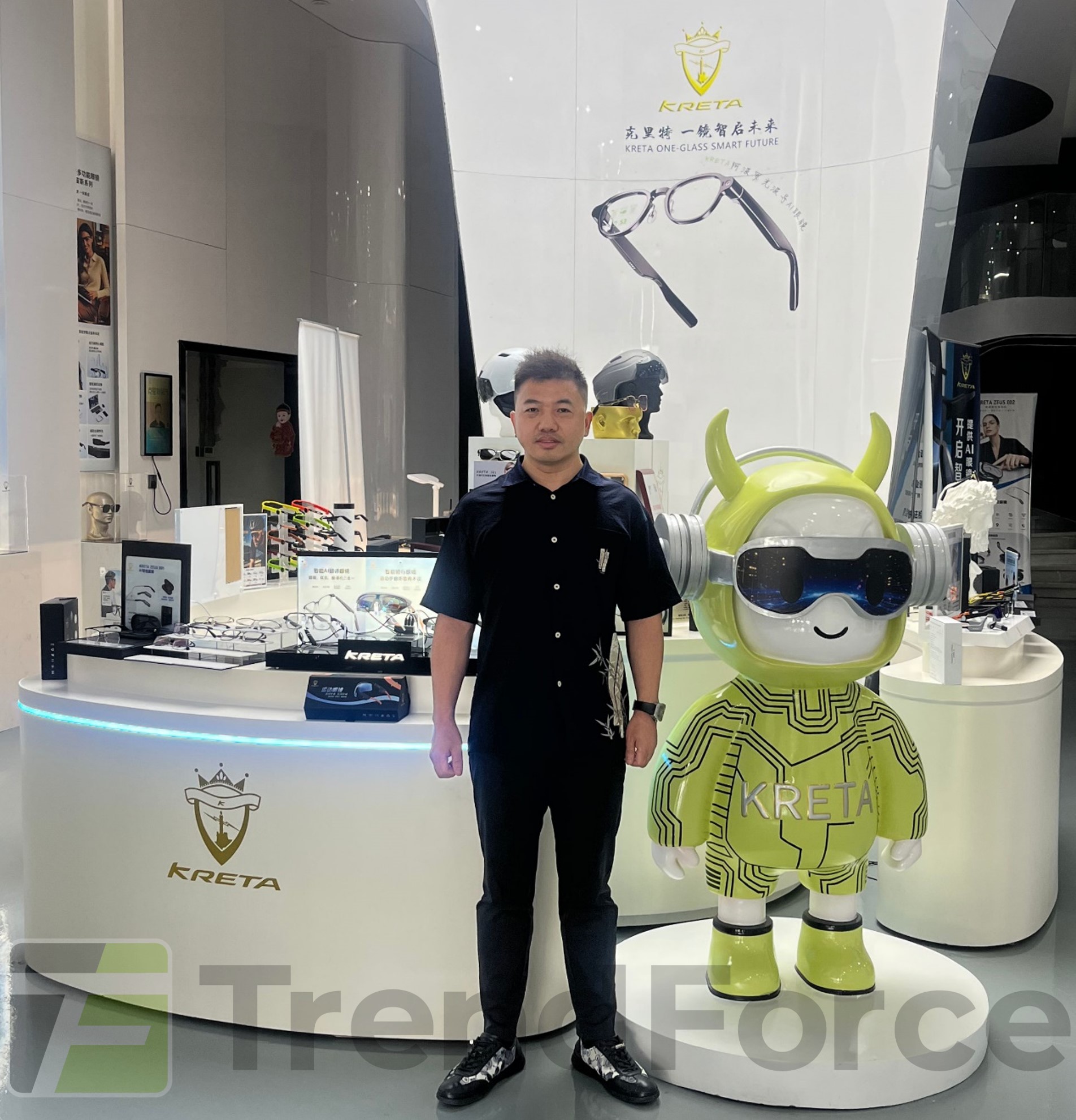
Mr. Zhang Jiawei, Chairman of KRETA
Established in December 2024, KRETA Technology (Guangdong) is a national high-tech enterprise, currently based in the Fenggang High-Tech Industrial Zone, Dongguan City, China. With a 6,000-square-meter facility dedicated to office operations and manufacturing, the company stands as a benchmark for end-to-end, in-house R&D and manufacturing of AI smart glasses in China. KRETA specializes in lightweight AI optics and AR wearables, with an eye toward reshaping the next generation of human-computer interaction. The company centers its business on AI audio, optical imaging, and AR smart glasses, delivering customized ODM/OEM services for overseas customers across Europe, North America, the Middle East, and South Africa, among others. Building on its manufacturing expertise in high-end consumer electronics, KRETA features a brand heritage based on the combination of affordable luxury aesthetics and core technologies, while employing a dual-track strategy for its presence in both consumer and enterprise markets: In the consumer market, the company provides a lineup of affordable luxury smart glasses tailored for translation, cycling, and camera use cases. In the enterprise market, the company delivers integrated hardware-software solutions for the government and enterprise, healthcare, accessibility, and agricultural sectors.
Capitalizing on Diverse Applications for Scenario-Based AI Glasses
Leveraging its extensive industry experience in the smartphone sector, KRETA is actively expanding AI glasses adoption across various scenarios while driving further market penetration.
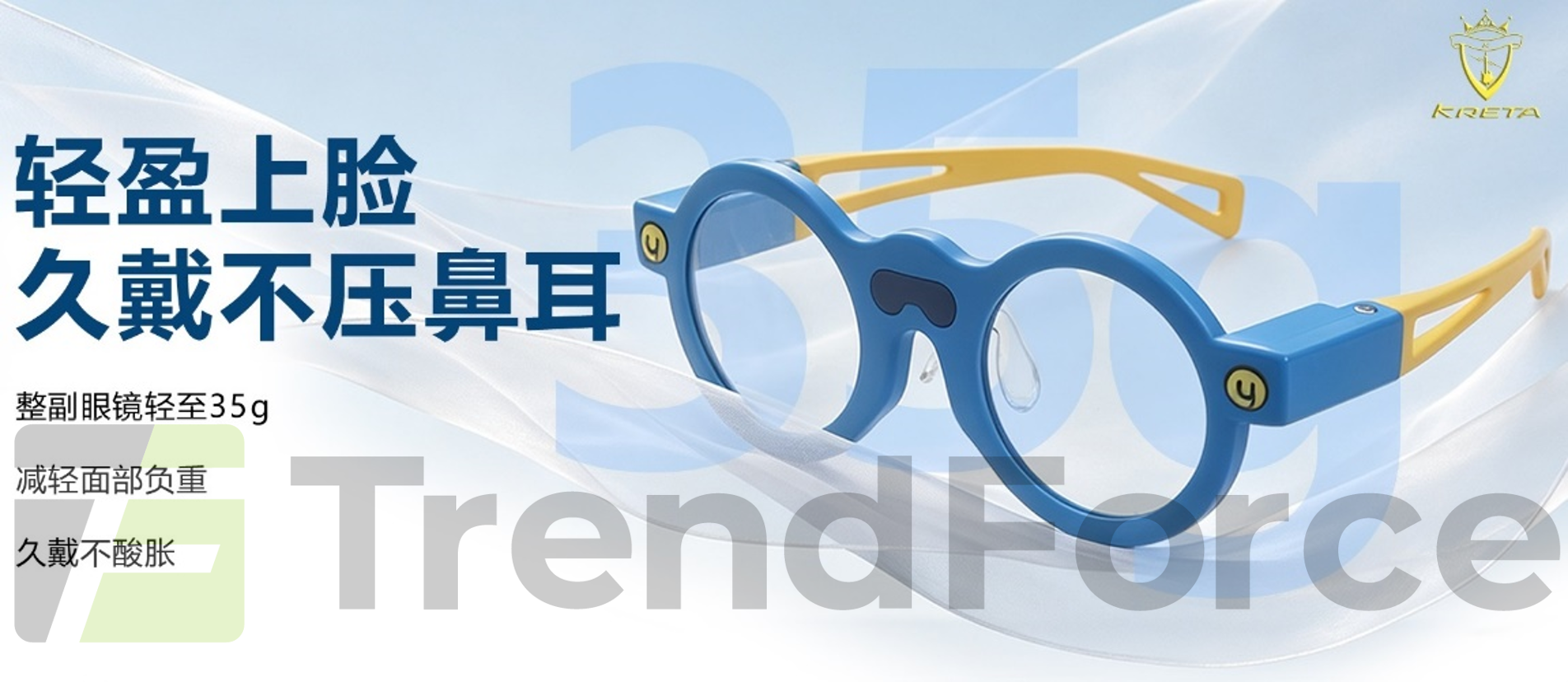
KRETA’s DRUBS U01 children’s posture-correction glasses
Among KRETA’s offerings, the children’s posture-correction glasses stand out as a prime example of its scenario-based smart glasses solutions. This model features built-in motion sensors to capture head posture in real time, triggering an automatic lens blur whenever children slouch, rest their heads on a desk, or tilt their heads by more than 30 degrees. This gentle reminder helps children to correct their reading and writing posture. Weighing roughly 35 grams, the device is well-suited for extended wear by children, supported by long battery life of up to 15 days on a single charge. According to KRETA, the first-generation product is currently available on the market, while the development of its next iteration has been accelerated to further reduce weight and enhance wearing comfort.
Device weight has been a critical differentiator in user experience, making ultra-lightweight design a high priority in KRETA’s R&D efforts. The company suggests that leveraging its technological expertise, KRETA can minimize the base weight of its ultra-lightweight AI glasses to approximately 15 grams, achieving a total device weight of 20 grams or less when equipped with the lenses.
In addition to children’s posture-correction glasses and ultra-lightweight AI glasses, KRETA has also launched AI camera glasses and AI outdoor cycling glasses, among other offerings, catering to the diverse needs of different user groups across various scenarios.
Grand Opening of the AI Glasses 4S Flagship Store and Global Debut of the Poseidon Series Designed for the Visually Impaired
On September 3rd, the grand opening ceremony for the Yuanqi KRETA AI Glasses 4S Flagship Store took place at the R&APARK in Dongguan, marking the debut of KRETA’s first AI glasses 4S flagship store in China. During the event, the company also unveiled the KRETA Poseidon series, AI glasses designed for the visually impaired.
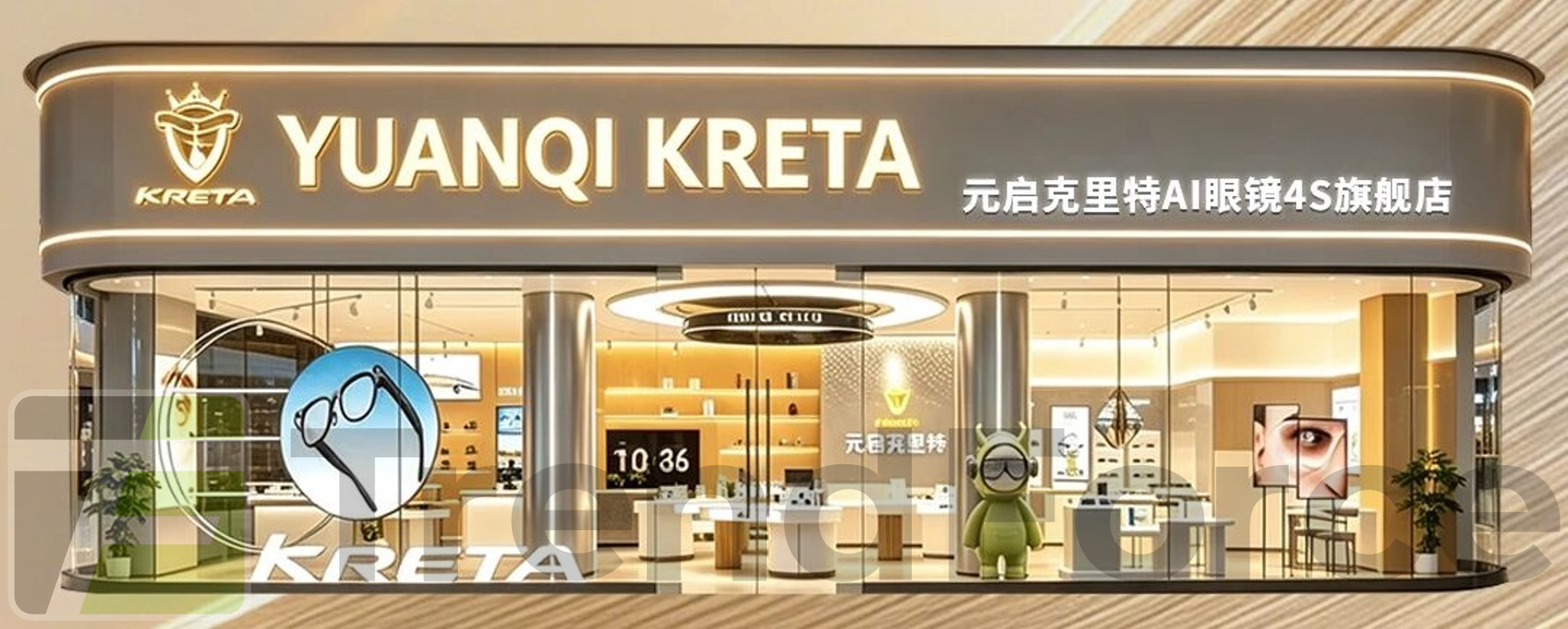
KRETA’s First AI Glasses 4S Flagship Store in China
According to KRETA, this flagship store in Dongguan redefines traditional brick-and-mortar retail by positioning itself as a physical hub that bridges the gap between the supply chain and end users. By delivering immersive experiences, careful customization, and dedicated after-sales support, the store enables direct feedback loops from users to the R&D team. This platform effectively addresses long-standing pitfalls in the smart device development workflow, in which R&D, manufacturing, demonstration/experience, and iteration typically proceed sequentially.
The KRETA Poseidon series, demonstrating the precise alignment between market demand and supply, aims to bring AI-empowered mobility experiences to the visually impaired community. This model features a first-person view POV camera to capture real-time video streaming data, combined with advanced spatial vision algorithms that identify the surrounding environment with high precision, alongside real-time audio support for assistive reading. Together with voice control for navigation and elevator floor number recognition, the Poseidon series improves the safety and convenience of independent mobility for visually impaired users.
Doubling Down on Waveguide AI Glasses for Future High-Demand Growth
Waveguide AI glasses are end devices featuring display capabilities, delivering a more diverse range of interactive communication experiences to users. While still at an early stage of market adoption, these devices hold a promising future toward successful commercialization.
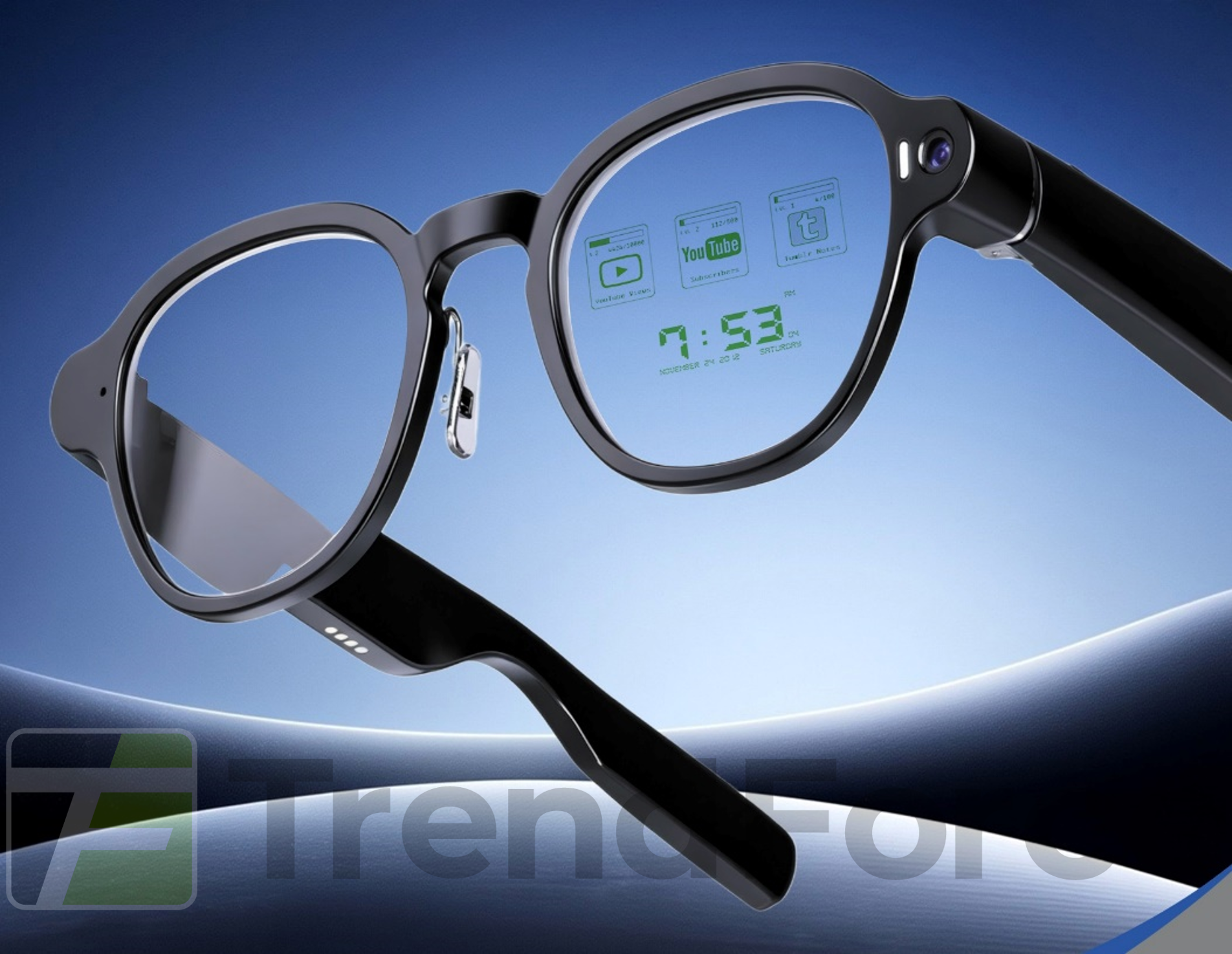
KRETA’s APOLLO V1 Waveguide AI Glasses
In light of high-demand potential in the waveguide AI glasses market, KRETA has forged ahead with product deployment and accelerated the R&D of related offerings. KRETA’s new APOLLO V1 waveguide AI glasses features polarized volume grating (PVG) waveguide technology and a 25° FoV. This model also adopts a monochrome green Micro LED display solution, achieving a near eye brightness of up to 1,500 nits, ensuring high-definition images on high-transparency lenses even under strong outdoor lighting.
Toward the Future
Looking ahead, KRETA stated it will continue to position itself toward robust consumer demand to secure its foothold in developing scenario-based AI glasses solutions.
On one hand, KRETA caters to the needs of the “silver economy” by leveraging AI glasses featuring visual and hearing aids, demonstrating the power of technology to empower minority groups and elderly individuals. On the other hand, the company has introduced children’s posture-correction glasses to control adolescent myopia progression, safeguarding vision health at its source. Furthermore, by drawing on years of technological expertise, the company continues to build ultra-lightweight AI glasses, while actively expanding into the mass consumer market, including AI glasses for outdoor cycling. The company aims to deliver comprehensive solutions for various needs in outdoor sports and daily life.
TrendForce 2025 Near-Eye Display Market Trend and Technology Analysis
Publication Date : 29 August 2025
Language : Traditional Chinese / English
Format : PDF
Page Number: 168
|
If you would like to know more details , please contact:
|


