Established in 2016, Cellid is a Tokyo-based waveguide design house with additional offices in California, USA, and Taoyuan, Taiwan. The company focuses on the R&D, production, and sales of waveguide technologies and SLAM (simultaneous localization and mapping) solutions, with its waveguides primarily manufactured by GIS. TrendForce recently had the opportunity to interview Cellid’s Head of R&D HW Department, Takeshi Kawahara to discuss their latest waveguide innovations and the company's future roadmap.
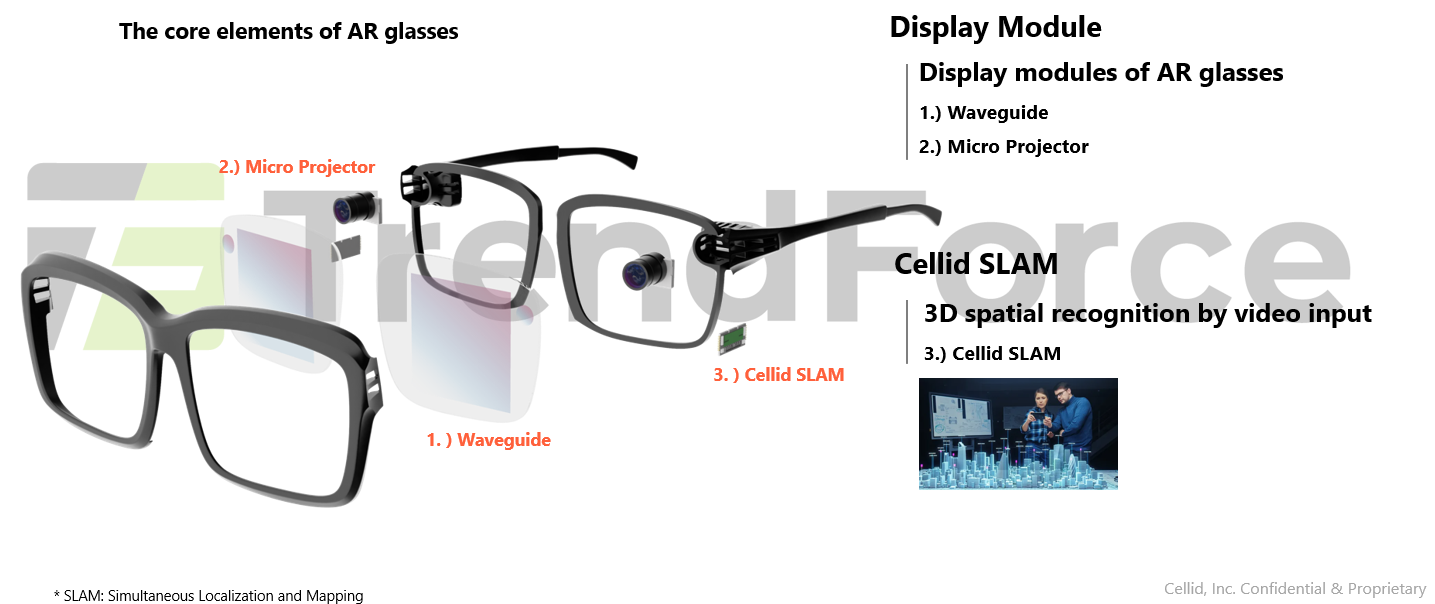
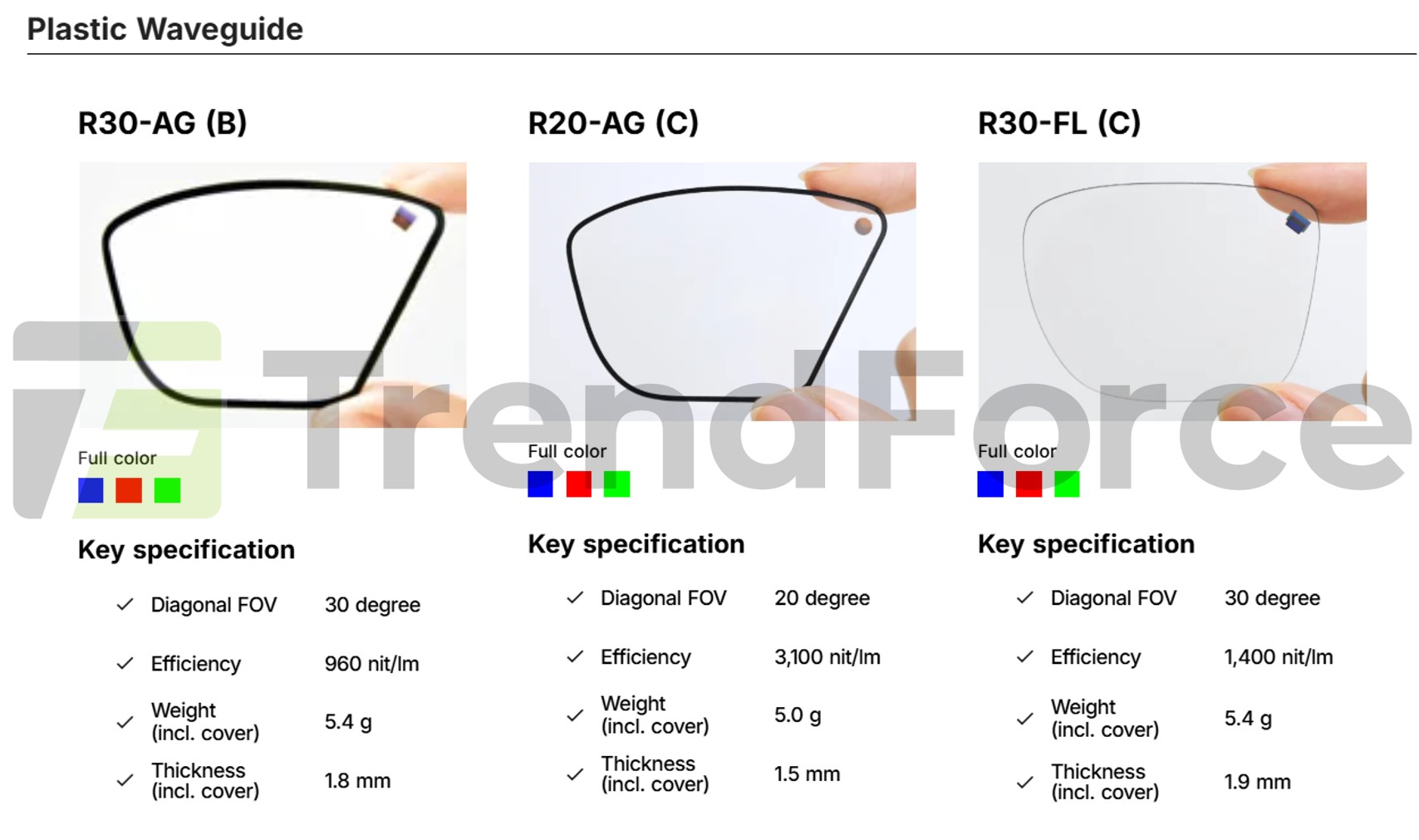
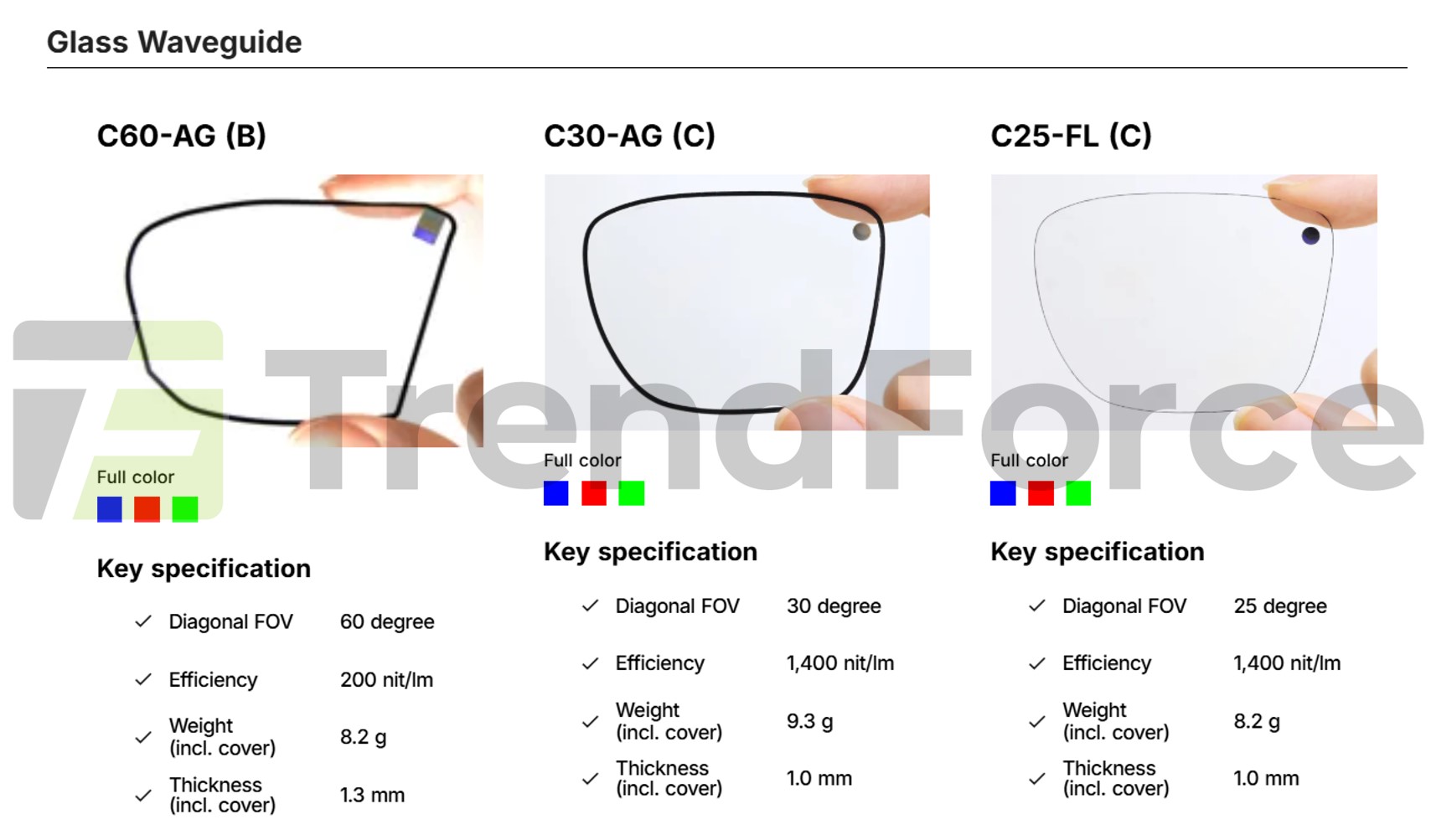
Cellid offers both plastic and glass-based waveguide solutions, manufactured using Nanoimprint Lithography (NIL) technology. The company primarily specializes in Diffractive Optical Element (DOE) technology, a type of Surface Relief Grating (SRG), due to its advantages in manufacturability, weight reduction, supply chain maturity, and cost competitiveness. To address common optical challenges such as the rainbow effect and chromatic dispersion, Cellid utilizes optical design technology along with independently developed materials created in collaboration with development partners.. Currently, Cellid’s glass-based waveguides boast an FOV (Field of View) of up to 60°. Meanwhile, their plastic-based waveguides prioritize an ultra-lightweight design, and the weight is kept below 4g with a strategic goal to further reduce this to a mere 3g while maintaining high efficiency.
To date, Cellid has demonstrated its own binocular AR glasses prototypes, in addition to collaborating with industry partners such as Jorjin, Pegatron and Jig.jp. Highlighting its in-house capabilities, Cellid showcased two distinct models. The first is an entry-level prototype featuring a plastic waveguide and a monochrome green display, delivering a 640×480 resolution and a 30° FOV, and waveguide-efficiency of 3000 nits/lm. The second is a next-generation full-color model designed for high-end applications.
Utilizing a glass waveguide, it maintains the 30° FOV but currently offers a 500×380 resolution, and waveguide-efficiency of 1200 nits/lm.
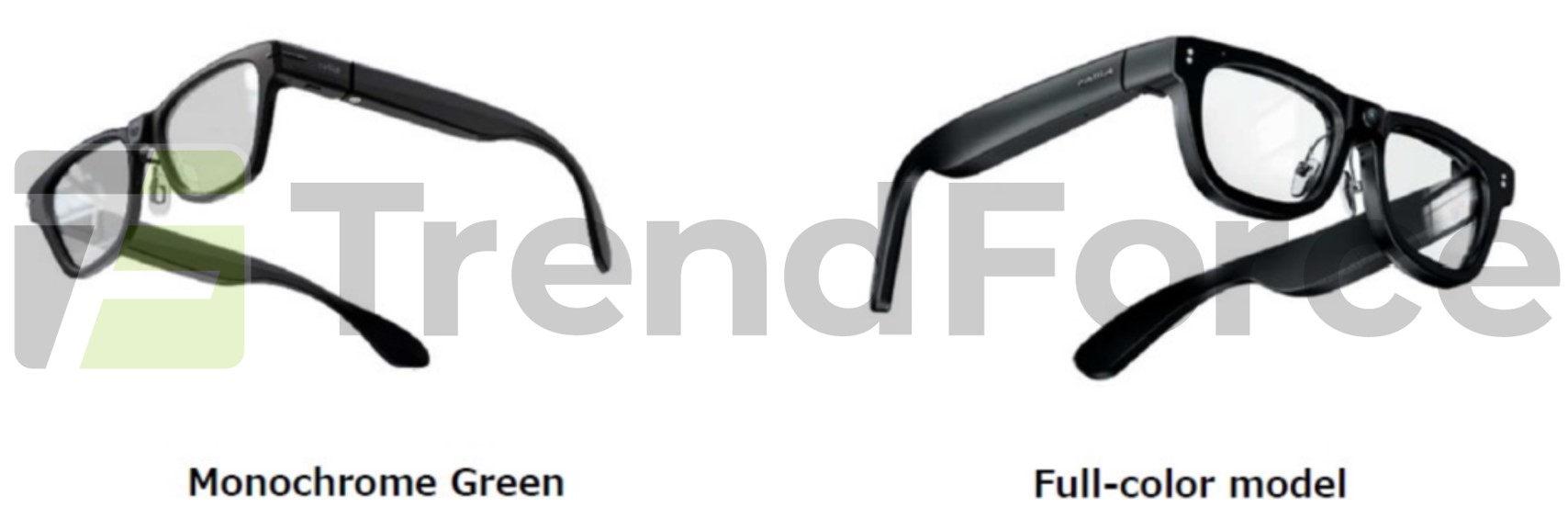
Cellid’s two models of AR glasses
At CES 2026, Jorjin unveiled its HJ1 AI smart glasses, a monocular, full-color AR device developed in partnership with Cellid. Equipped with Jorjin's proprietary AI technology and a Cellid-supplied glass waveguide, the glasses deliver a 640×480 resolution and a 25° FOV. Industry sources suggest that Jorjin plans to begin mass production as early as this year.
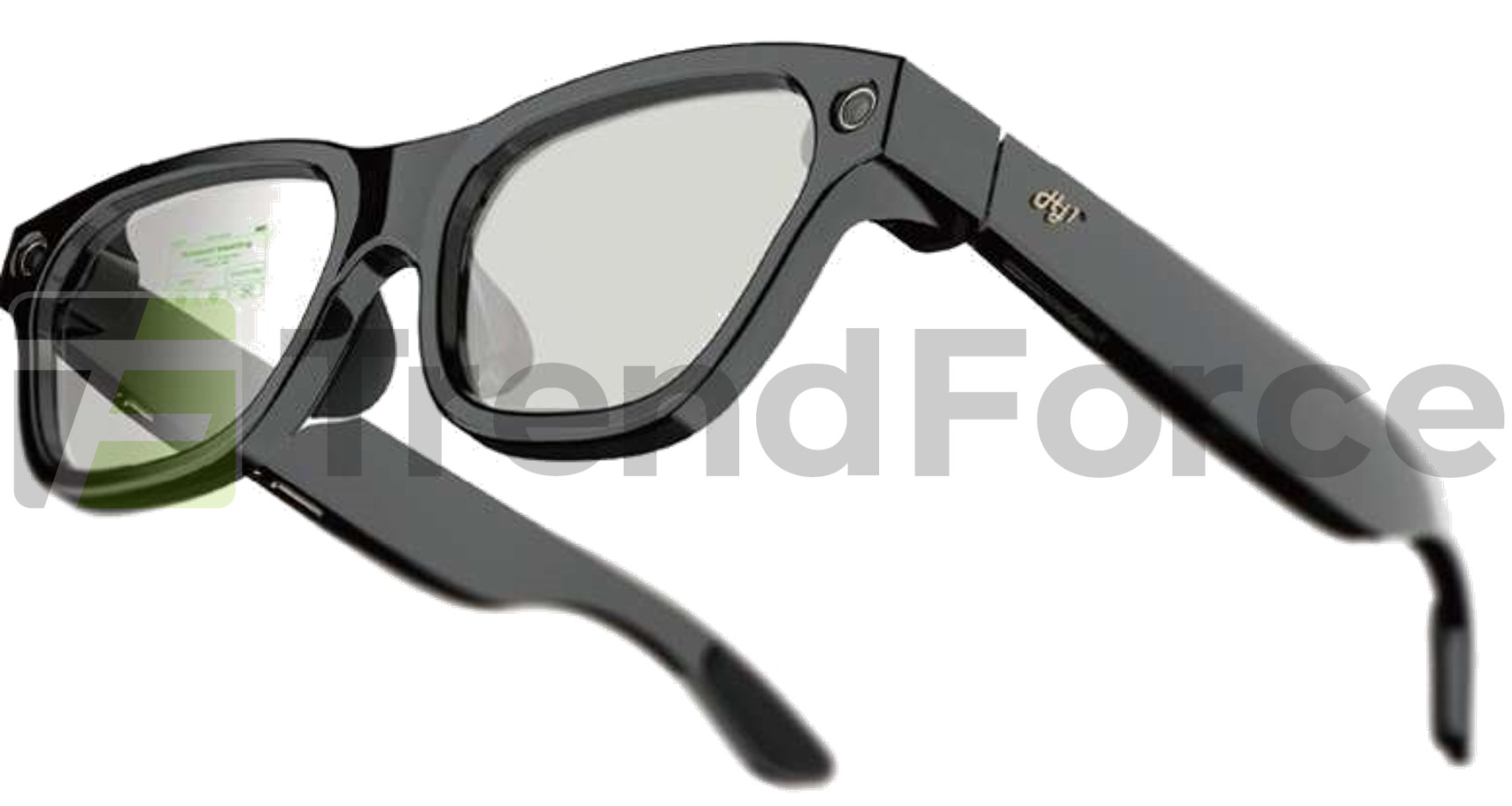
Jorjin HJ1AI
Looking ahead, Cellid envisions a future where AR glasses are seamlessly integrated into diverse application scenarios, including shopping, transportation, healthcare, remote support, and translation. To realize this vision, Cellid is actively partnering with various companies across these sectors.
Author: Estelle / TrendForce
TrendForce 2025 Near-Eye Display Market Trend and Technology Analysis
Publication Date : 29 August 2025
Language : Traditional Chinese / English
Format : PDF
Page Number: 168
|
If you would like to know more details , please contact:
|


